

Working Forest Easements
Working forests are at the core of our mission.

Nova Scotians now have the opportunity to join a growing land trust focused on preserving woodlands through Working Forest Community Easements under the Nova Scotia Community Easement Act.

These Working Forest Easements protect woodlands while supporting landowners through flexible zoning. They balance ecological forestry, residential and non-forestry uses, restoration, and conservation, allowing stewards to maintain responsible care with regular monitoring to ensure environmental health and carbon storage.
-
A working forest or working woodland refers to a forested area that is actively managed for multiple purposes, including sustainable timber production, ecological health, wildlife habitat, and other forest products. The goal is to balance the economic use of the forest with long-term environmental stewardship, ensuring that the forest remains productive, resilient, and healthy for future generations.
Working forests typically involve practices like selective harvesting, promoting natural regeneration of long-lived species, and other management strategies that support or enhance the forest's ecological integrity.
What is a Working Forest Community Easement?
A Working Forest Community Easement is a legal agreement between a woodland owner and a private conservation/community organization or public agency(the Easement holder). In our instance, the agreement is between NSWWT and a property owner with the purpose of preserving working forest land under the Nova Scotia Community Easement Act.
The agreement distinguishes between intensive and prohibited land uses—such as clear-cutting, subdivision, and mining—from permitted stewardship activities like recreation, farming, and ecological forestry. Working Forest Community Easements are granted in perpetuity and apply to the land regardless of who may own it in the future.


By building a network of Working Forest Easements, the NSWWT helps promote landscape connectivity and enhance the health of Nova Scotia’s watersheds.
What activities can occur on a property under Easement?
NSWWT works with each woodland steward to understand what is and isn’t allowed - our Agreed Practices - under the terms of the Easement. These are broken down into three types of activities.

-
Low impact uses including hiking, trail clearing, non-commercial foraging, or motorized vehicle use on designated roads.

-
Activities requiring a 60-day advance notification to NSWWT, including forest harvesting, new road construction, and restoration projects. All activities must adhere to the recommendations outlined in the approved Stewardship Plan.

-
Intensive activities including property subdivision, liquidation or unsustainable harvesting practices, or new residence construction
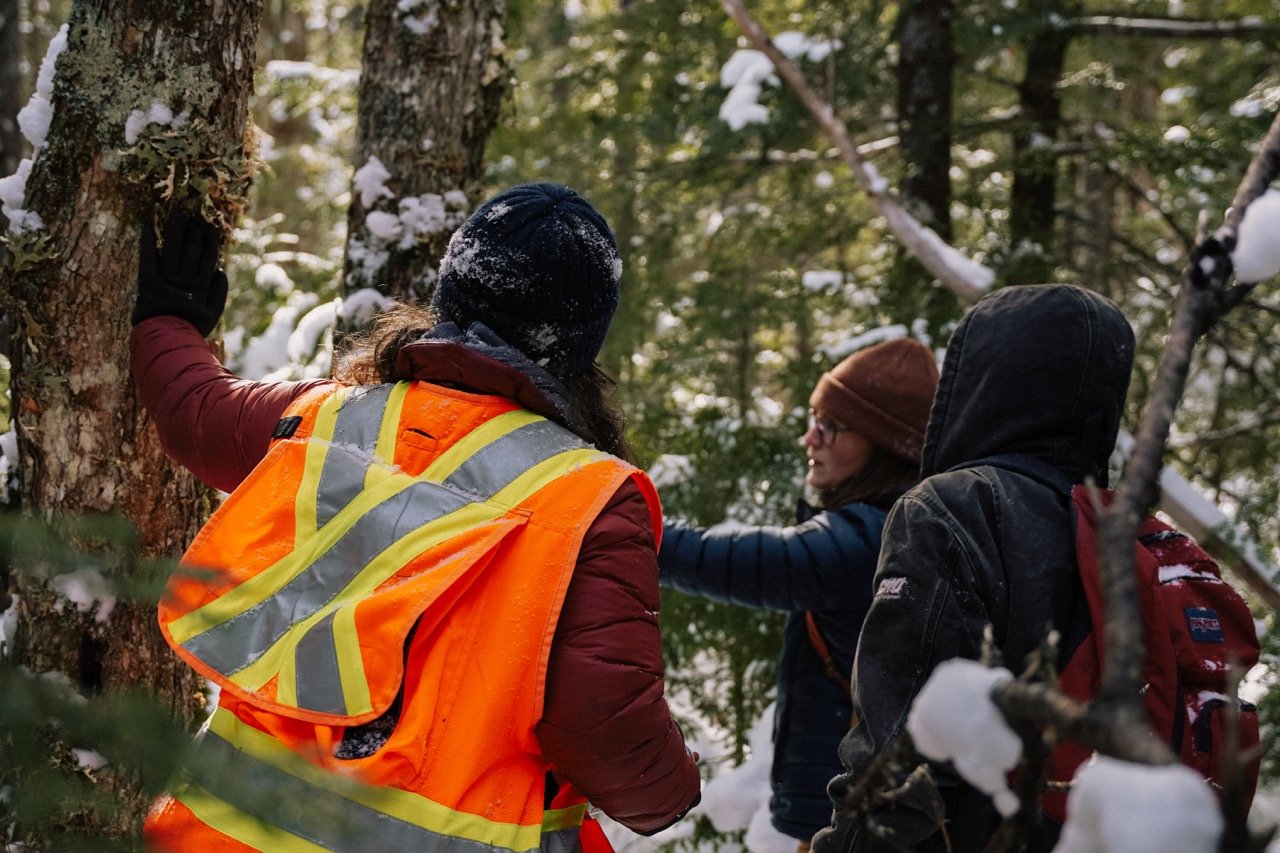
Our talented staff conduct annual monitoring of NSWWT easement properties to ensure forest health and compliance with easement guidelines.
Easement Zones
We recognize that woodlands offer many values and uses. Our goal is to work with you to create specific zones within the Easement that support healthy, working forests while also considering areas for permanent protection.
NSWWT designates zones based on each property's unique characteristics: 1) working forests, 2) agricultural & residential, and 3) conservation. We carefully assess each property collaboratively with each land steward to make zoning decisions based on current and future needs. Zones specify where Easement rules apply, giving you the flexibility to choose what works best for your land.

-
Does not allow for any forestry or development activities
Designated as ‘forever wild’, ensuring the land remains untouched, preserving ecosystems, wildlife, and biodiversity
-
Allows for Ecological forestry
Allows for Road and trail construction as outlined in stewardship plan
Allows new builds under 200 ft2 (limited to 1 structure every 25 acres)
-
Allows new builds above 200ft2
Agriculture and land clearing is allowed
Want to learn more about how a Working Forest Easement might work for you?
Fill out the attached form, and one of our knowledgeable staff will be in touch.
